
Introduction
“Have you ever gone through a stressful time and noticed more hair on your pillow, in the shower, or stuck in your brush? You’re not alone — and it’s not in your head.”
Stress can cause real, noticeable hair loss. Whether it’s from burnout, emotional stress, a health scare, or big life changes — stress affects your whole body, including your scalp and hair growth.
Let’s break down how it works, what science says, and what you can do to help your hair recover.
How Hair Grows (and Falls)
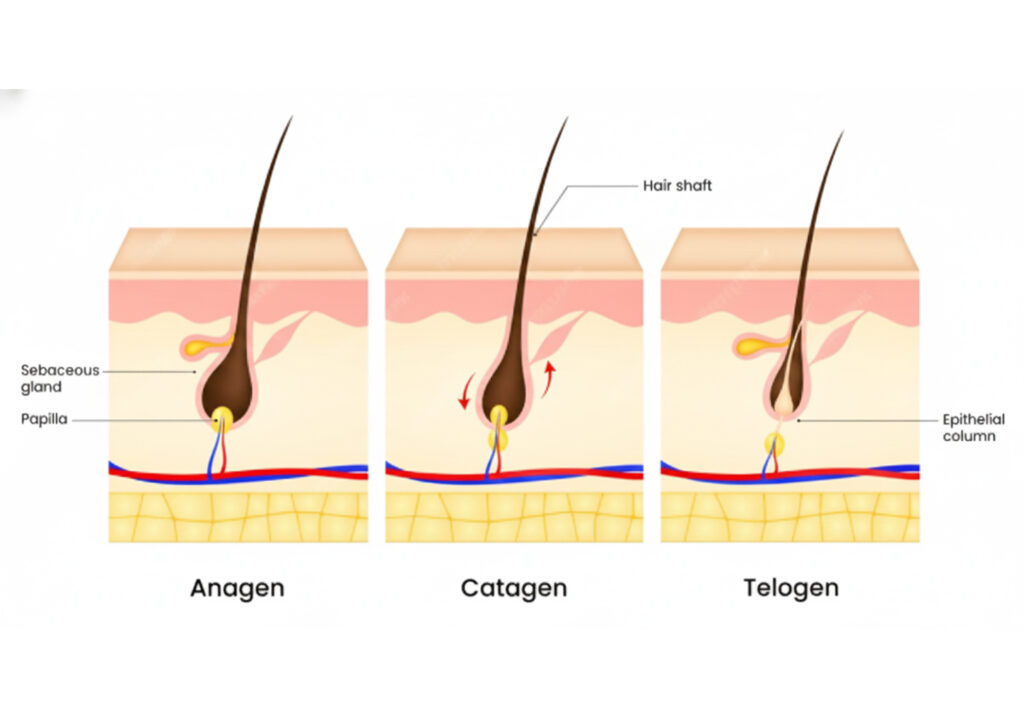
Your hair grows in a cycle:
- Growth phase (Anagen): where your hair is actively growing
- Resting phase (Telogen): where it takes a break and eventually falls out
Normally, most of your hair is in the growth phase. But when you’re under stress, a lot of hair jumps into the resting phase all at once — and that’s when you notice more shedding. This is called telogen effluvium (don’t worry, it’s temporary).
Types of Hair Loss Linked to Stress
1. Telogen Effluvium (Most common)
Happens about 1–3 months after something stressful — like a breakup, illness, surgery, crash diet, or even emotional burnout. Hair starts falling out more than usual, but the roots are still healthy, and it often grows back.
2. Trichotillomania
This is when someone pulls out their own hair due to anxiety or stress. It’s more emotional and might need therapy or support to manage.
3. Alopecia Areata
This is when the immune system attacks hair follicles, often triggered by stress. It leads to small bald patches on the scalp or body. A doctor should help with this.
What Stress Does to Your Hair and Scalp
Stress affects your body in more ways than you’d think — especially your scalp.
- Raises cortisol (the stress hormone), which can mess with your hair cycle
- Reduces blood flow to the scalp — less nutrition for your hair
- Triggers inflammation, making your scalp itchy, tight, or flaky
- Disrupts hormones, especially thyroid, estrogen, and testosterone — all important for hair growth
Signs That Stress Might Be Affecting Your Hair
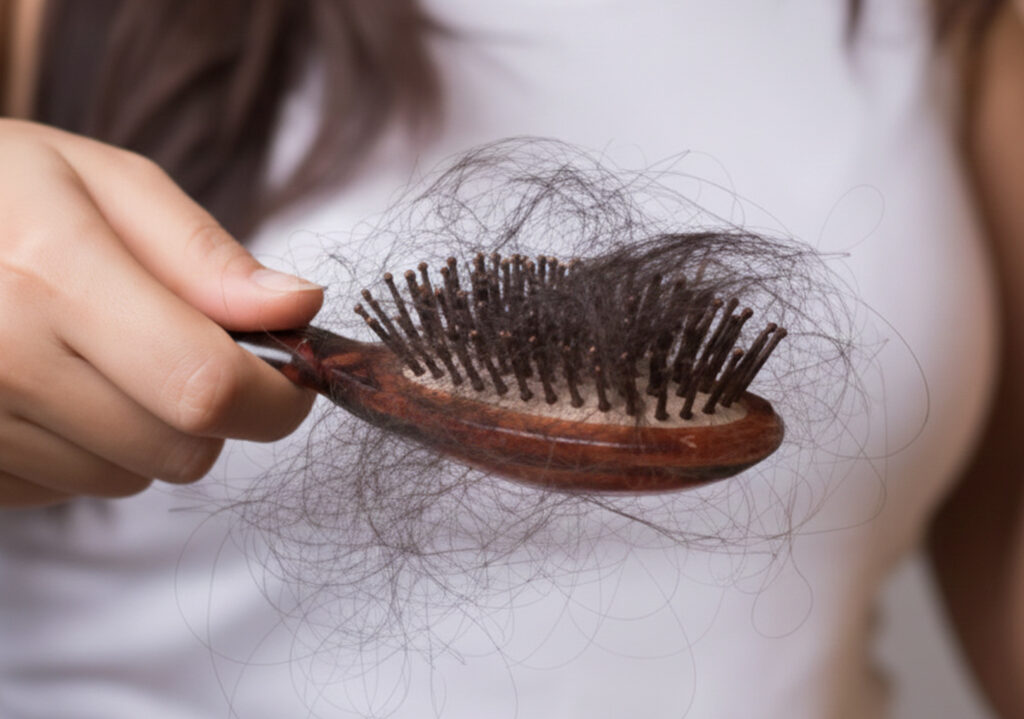
- Hair coming out in clumps while washing or brushing
- Thinner ponytail or more scalp showing
- Hair feels drier or breaks easily
- Scalp feels sore, tight, or itchy
- More shedding than usual, especially 2–3 months after a stressful event
What You Can Do: Simple, Science-Backed Solutions
1. Start by Managing the Stress Itself
Your hair can’t heal if your body is constantly tense. Try:
- Short daily walks
- Guided breathing or meditation apps (even 5 minutes helps)
- Journaling before bed
- Cutting back on overwork or too much screen time
- Talking to someone you trust
You don’t need to be perfect — just pick one small calming habit you can stick with.
2. Give Your Scalp Some Love
When you’re stressed, your scalp gets tight and irritated. That blocks healthy growth.
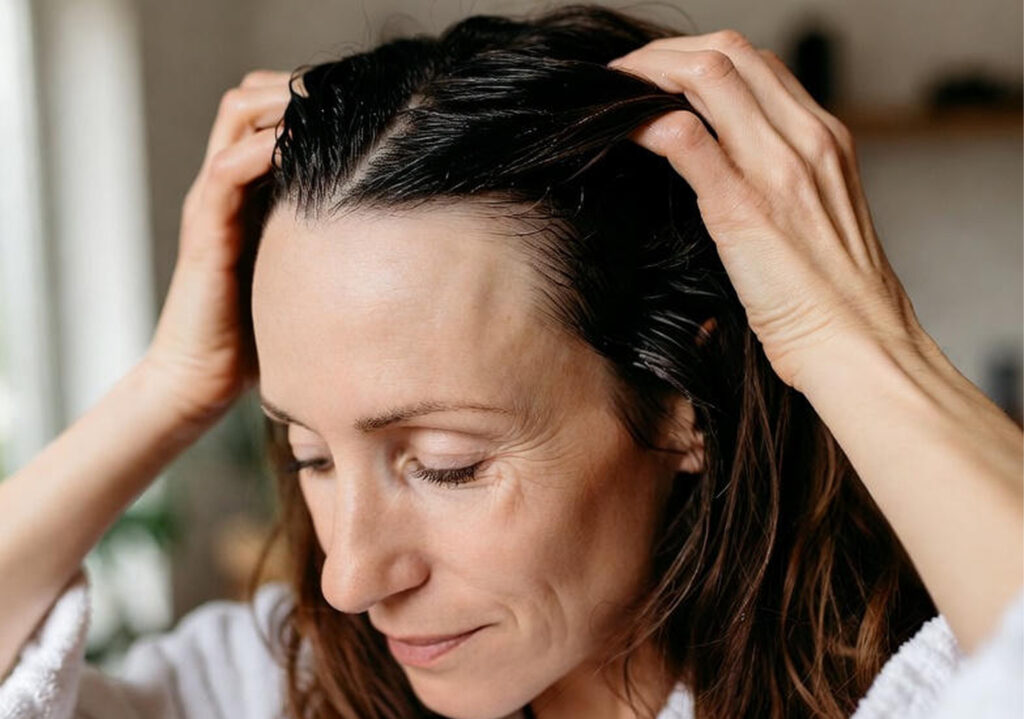
- Massage your scalp for 2–3 minutes a day with your fingers
- Use light oils like almond, brahmi, or coconut oil
- Keep products simple — avoid heavy buildup or harsh treatmentsTalking to someone you trust
3. Support Your Body with the Right Nutrients
When your body is stressed, it burns through nutrients faster — and your hair needs these to stay strong:
- Iron (leafy greens, lentils)
- Vitamin D (sunlight or supplements)
- B-complex vitamins (whole grains, nuts, eggs)
- Magnesium (bananas, dark chocolate, pumpkin seeds)
- Ashwagandha or adaptogens (help lower stress naturally)
Ask your doctor before adding supplements — or start with whole foods.
4. Sleep = Hair Repair
Sleep is the time your body heals — including your scalp. Less sleep = more cortisol = more hair fall.
Aim for 7–8 hours of rest with minimal screens or caffeine before bed.
5. Be Gentle and Patient
Don’t panic if you’re seeing hair fall — if it’s from stress, it usually grows back in a few months once your body feels safe again.
- Avoid chemical treatments or constant heat styling
- Use soft towels and gentle brushes
- Focus on consistency, not perfection
When to See a Doctor
If your hair fall is sudden, patchy, or keeps getting worse even after 3–4 months:
- Get blood tests (iron, thyroid, B12, Vitamin D)
- Talk to a dermatologist or hair specialist
- Consider emotional support or therapy if stress feels overwhelming
Final Thoughts
Hair loss from stress is real — but you’re not stuck with it forever. Your body just needs some time, support, and a little care to recover.
By lowering stress, nourishing your body, and caring for your scalp gently, you’re already helping your hair regrow — even if you can’t see it just yet.
Related articles
-

Doctor Ranks Top 3 Trending Hair Growth Solutions. Only One Hit 85% Success.
It’s natural to feel doubtful. The internet is full of “breakthrough” hair growth remedies that trend for a moment, only to collapse when tested…
-
Stress and Hair Fall: What the Research Says
Introduction “Have you ever gone through a stressful time and noticed more hair on your pillow, in the shower, or stuck in your brush?…
-

Could Your Diet Be Affecting Your Hair Health?
Introduction When your hair starts falling more than usual, looking dull, or feeling brittle, the first instinct is often to blame products or weather.…
-
7 Common Causes of Hair Fall You Might Be Ignoring
Introduction Hair fall is one of the most frustrating health concerns — especially when it feels sudden or unexplained. While hereditary factors (like male…
